
Considering installing solar panels for your home? This is indeed an important decision that requires a comprehensive understanding of technology, the market, and service providers. To help you thoroughly clarify your thinking, this guide will start with the core of product technology and market trends, and will focus on the content you are concerned about: how to step-by-step find a reliable installation service company, and understand the complete installation process from signing a contract to generating electricity. We hope this comprehensive science guide will help you develop a clear and objective understanding.
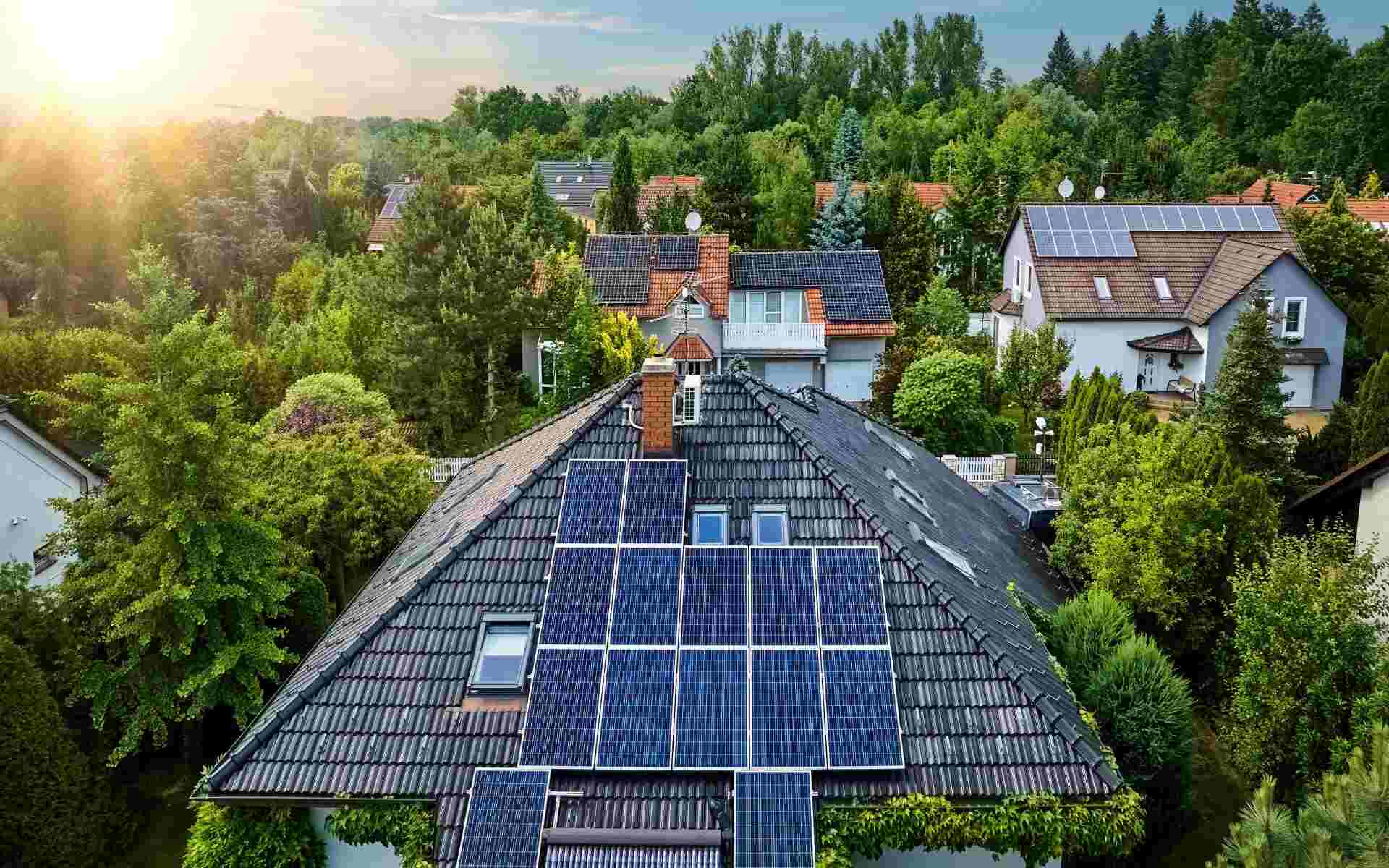
Part 1: Understanding the Product Core—Technology, Components, and Systems
The performance and value of a solar system are rooted in its technology type and component quality.
1. Solar Cell Technology: The Foundation of Efficiency
The cell is the core unit of photoelectric conversion, and its material determines its fundamental characteristics.
| Cell Type | Key Characteristics | Common Application Scenarios |
|---|---|---|
| Monocrystalline Silicon | Made from a single silicon crystal, with a uniform dark appearance. Typically offers higher conversion efficiency. | Suitable for homes with limited roof space who wish to maximize power generation capacity. |
| Polycrystalline Silicon | Made from cast polysilicon ingots, with a blue, ice-patterned appearance. Usually offers a balanced cost-effectiveness. | Suitable for projects with ample roof space that focus on the overall return on investment. |
| Thin-Film Cells | Photovoltaic material deposited on a substrate, lightweight and flexible, sometimes with better performance in low-light conditions. | Often used for commercial roofs or scenarios with special requirements for weight or appearance. |
2. Key System Components: More Than Just Panels
A complete system requires the coordinated work of several components:
- Inverter: Responsible for converting the direct current (DC) electricity generated by the panels into alternating current (AC) electricity usable by the home. Currently, solutions that equip each panel with microinverters or power optimizers are becoming increasingly popular, effectively reducing overall generation loss caused by partial shading.
- Mounting System: Ensures the panels are safe and secure in all weather conditions. Designs vary greatly depending on the roof type.
- Monitoring System: Allows you to view generation data in real-time via a phone or computer, serving as the "dashboard" for checking system health.
Part 2: Market Observations and Service Provider Evaluation
1. Current Market Trends
Beyond technological iteration, the market also shows new characteristics: greater attention is being paid to the integrated design of panel appearance with architecture; meanwhile, energy storage systems that enable "self-consumption" are becoming a consideration for more and more households, for use during power outages or other needs.
2. How to Find and Evaluate Installation Service Providers
Choosing a reliable service provider is equally as important as choosing the product itself. You can refer to the following steps and criteria for evaluation:
- Obtain and Compare Detailed Quotes: Contact multiple well-regarded local service providers for consultation. A professional quotation should clearly list the panel brand and model, inverter brand and model, estimated total power generation, warranty terms, total cost, and payment stages, not just a total price.
- Verify Credentials and Experience: Confirm whether they hold necessary professional qualifications such as electrical installation licenses. Ask about the number of installation cases they have in your community and request to see photos of actual projects or conduct site visits.
- In-depth Communication and Plan Review: A good engineer or salesperson should patiently answer questions and personally assess your roof's orientation, tilt angle, and potential shading objects, either in person or using tools, rather than relying solely on map estimates.
- Clarify Warranty and Service Terms: Be sure to clarify the responsible party and duration of the warranty for each part. Typically, panels come with a product power warranty of up to 25 years, inverters have warranties ranging from 5 to 12 years, and the installation work itself has a separate workmanship warranty.
Part 3: Overview of the Solar System Installation Process
Understanding the standard process can help you better supervise project progress. A typical installation cycle ranges from a few weeks to a couple of months and mainly includes the following stages:
- Initial Consultation and Site Survey: The service provider visits your home to take detailed measurements of the roof dimensions and structure, inspect the electrical panel, and finalize the system layout and configuration plan.
- System Design and Grid Connection Application: The service provider completes a full set of system design drawings for you and submits a grid connection application to the local utility company on your behalf. Construction can only begin after obtaining permission.
- Equipment Procurement and Delivery: All major equipment (panels, inverters, etc.) arrives on-site. You can verify that the brands and models match those specified in the contract.
- On-site Installation and Construction: This usually takes 1-3 days. Steps include installing the mounting structure, securing the panels, connecting electrical wiring, and installing the inverter.
- System Inspection and Grid Connection: After construction is complete, the service provider performs debugging and self-inspection. Subsequently, the utility company must be contacted for grid connection inspection and installation of a bidirectional meter. Once the inspection is passed, the system can officially start operation and generate electricity.
Questions and Answers
Q: What preparations are needed for the roof before installing a solar system?
A: The main task is to inspect the roof condition. If your roof shingles are nearing the end of their lifespan or if there are existing leaks, it is advisable to repair or replace the roof before installation, as the cost of accessing the roof again after installation will be higher.
Q: Does the homeowner need to be present during the installation process?
A: It is best for the homeowner to participate in key stages such as signing the contract, the site survey, equipment delivery verification, and the final inspection. It is not necessary to be present throughout the daily construction period, but maintaining clear communication is important.
Q: What needs to be done after the system is installed and connected to the grid?
A: Daily tasks mainly involve monitoring whether the power generation is normal through the monitoring app. Keep the panel surface relatively clean; cleaning may be considered when significant dust accumulation or snowfall affects generation. Periodically (e.g., once a year) check for any signs of loose cables or mounting hardware.
Q: How should the solar system be handled if selling the house in the future?
A: The energy benefits of a home with a solar system have become an evaluable asset. During a real estate transaction, the value of the system can be assessed and included in the house price, or it can be transferred to the buyer through negotiation at a reasonable price.
References
- https://www.energy.gov/energysaver/solar-photovoltaic-systems
- https://www.seia.org/initiatives/solar-home-systems
- https://www.energy.gov/energysaver/solar-energy-home
- https://www.nrel.gov/research/solar.html
- https://www.solar-estimate.org/
- https://www.solarreviews.com/
- https://www.energystar.gov/products/solar_panels
- https://www.cesa.org/resource-library/
- https://www.solarpowerworldonline.com/
- https://www.aceee.org/sector/residential/solar