
Thinking about adding a sunroom? It's a popular way to bring in more light and connect your home to the outdoors. This guide provides a straightforward overview to help you understand the basics. We'll cover the common types of sunrooms and where they work best, outline the key benefits they offer, and touch on the important technical and construction details that make them comfortable. We'll also discuss the practical side of ownership, including maintenance, costs, and how such an addition might affect your home's value. Finally, we'll answer some frequently asked questions.
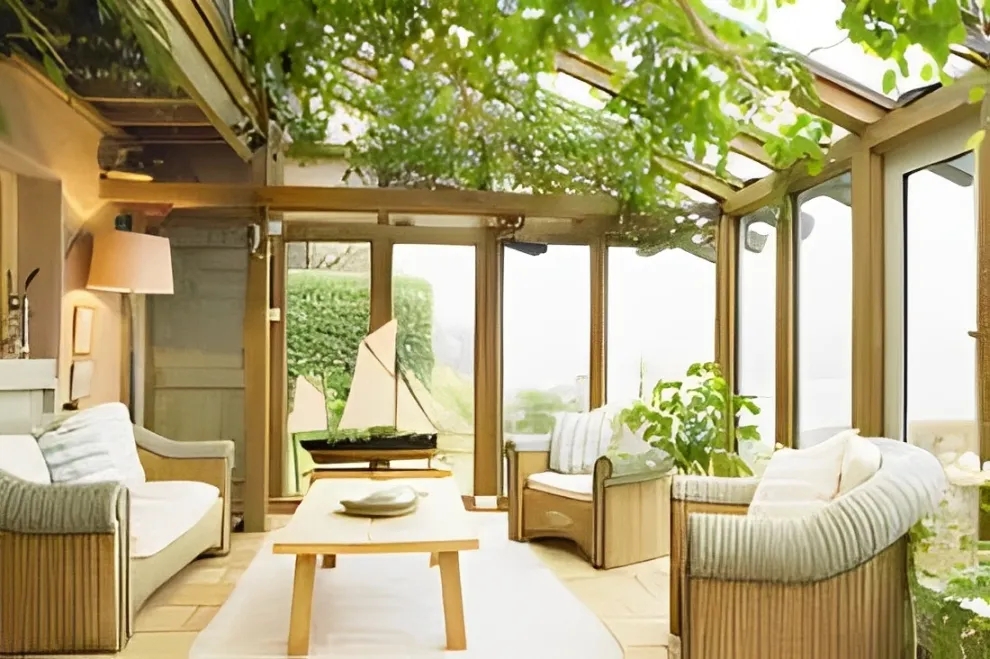
Types of Sunrooms and Regional Fit
Sunrooms are not one-size-fits-all. The right choice depends heavily on climate and how you plan to use the space.
| Type | Key Characteristics | Common Regional Fit |
|---|---|---|
| Four-Season / All-Season Room | Fully insulated with thermal glass and connected to the home's heating/cooling. Built for daily, year-round use. | Common in colder climates (North, Midwest) where extending living space is a priority despite winter weather. |
| Three-Season Room | Less insulation, typically not connected to main HVAC. Ideal for use in spring, summer, and fall. | Popular in regions with longer mild seasons (South, Sun Belt) as a cost-effective way to enjoy the outdoors. |
| Solarium | Modern design with minimalist frames and large glass panels for maximum, unobstructed views. | Appeals to contemporary homes, often in settings with a specific view to highlight. |
| Converted Porch | An existing porch or deck is enclosed with windows and a roof. | A pragmatic upgrade path found in all regions. |
Core Benefits of a Sunroom
Adding a sunroom is about enhancing lifestyle. Key benefits include:
- Increased Natural Light: Abundant daylight can improve mood and create a cheerful living space.
- Connection to Outdoors: Provides a sheltered space to enjoy gardens, views, and wildlife in most weather conditions.
- Versatile Space: Can serve as a lounge, dining area, home office, or plant room, adapting to your needs.
Who Typically Considers Adding a Sunroom?
While any homeowner might be interested, certain groups are more common.
- Homeowners Seeking Lifestyle Enhancement: Often families or individuals who are settled in their homes and wish to improve their daily living experience without moving. They value natural light, a connection to their yard or garden, and a dedicated space for relaxation or hobbies.
- Households Planning for Aging in Place or Empty Nesters: Individuals or couples looking to create a pleasant, accessible, and light-filled space for reading, visiting with family, or enjoying indoor plants. A single-level sunroom with easy access from the main living area can be very appealing.
- Hobbyists and Plant Enthusiasts: Those passionate about gardening, bird-watching, or other light-dependent hobbies may prioritize a sunroom as a dedicated space for these activities. Key considerations here are ventilation and access to water sources.
- Homeowners with Specific Views or Lots: Properties with attractive views (woods, water, gardens) may place significant value on a sunroom that frames and provides access to that vista.
Technology and Construction Essentials
Comfort in a sunroom relies on specific building components.
- High-Performance Glass: Double- or triple-pane insulating glass with a low-emissivity (Low-E) coating is standard. This coating helps manage heat transfer, keeping rooms warmer in winter and cooler in summer.
- Proper Framing: Frames should provide a thermal break (a barrier against temperature transfer). Common materials include thermally broken aluminum, vinyl, and wood-clad options.
- Climate Management: Adequate ventilation through operable windows, ceiling fans, or roof vents is essential to prevent overheating. Four-season rooms often require a dedicated heating/cooling source, like a mini-split system.
Maintenance, Costs, and Value Considerations
Owning a sunroom involves ongoing considerations.
- Maintenance: Routine care involves cleaning glass and frames, checking seals, and ensuring vents operate smoothly. In snowy climates, light snow removal from the roof may be necessary.
- Costs and Budgeting: Costs vary widely based on size, materials, and whether it's a three-season or four-season build. Industry data shows a broad cost spectrum. Obtaining multiple detailed quotes from licensed contractors is crucial for accurate budgeting.
- Investment Return: The impact on resale value can vary. A well-built, four-season room that adds functional square footage is generally viewed favorably. However, like many home improvements, a full financial return on the investment is not guaranteed and depends on local market conditions.
Frequently Asked Questions
Q: Do sunrooms get too hot or too cold?
A: With proper modern materials—like Low-E glass, good ventilation, and optional shades—temperature extremes can be effectively managed. A four-season room with dedicated climate control is designed for year-round comfort.
Q: How long does construction typically take?
A: For a custom site-built addition, the process often takes between 8 to 12 weeks from start to finish, including foundation work and inspections.
Q: Are building permits required?
A: Almost always. Permits ensure the structure meets local codes for safety, energy efficiency, and load requirements. A reputable contractor will handle this process.
Q: Can I put a sunroom on my existing deck?
A: It requires professional evaluation. Decks are built for different loads than permanent structures. Often, the existing foundation needs reinforcement or replacement.
Sources and Data References: